Launch offer — valid today only

📄 Digital book in PDF · read it on your phone or print it

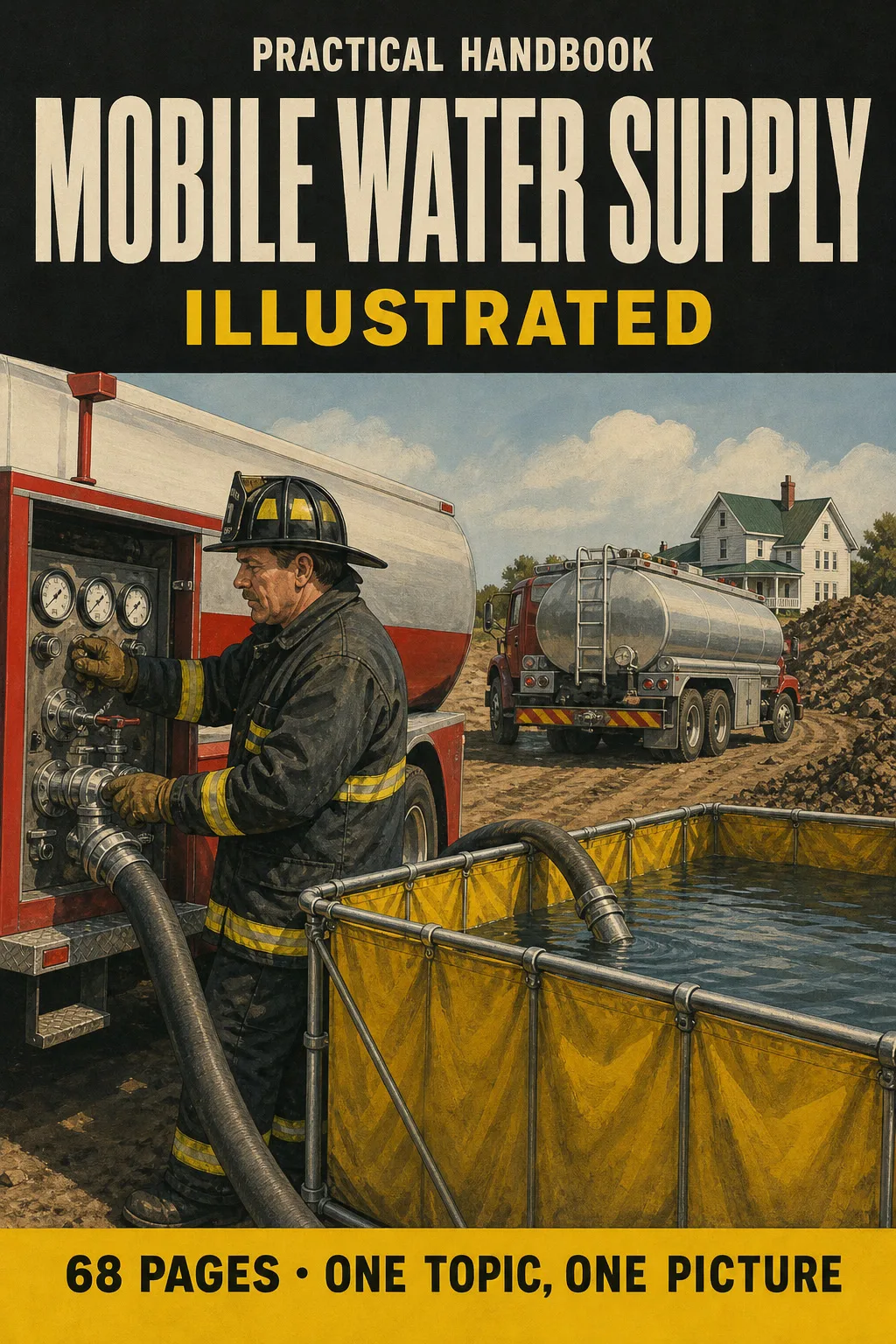
Mobile Water Supply and the Driver/Operator Exam, Illustrated The Whole Shuttle, Step by Step

Fill site, drafting, priming, drop tanks, dump site traffic, tender rollover, shuttle flow rate, friction loss and ISO tanker credit. Each topic gets its own page: the drawing first, then what you need to remember. 68 illustrated pages.

YES, I WANT THE SHUTTLE DRAWN

🔒 Secure checkout · PDF by email · 30-day guarantee

Every topic, its own pageEach shuttle step and each calculation drawn, with the explanation right beside it
68 illustrated pages9 parts, from the job and the exam to test-day review
Up-to-date sourcesNFPA 1002/1010 and NFPA 1142/1140, with every number marked so you can check it against your state's edition
PDF by emailFormat

Look Inside the Book

Every page has one big drawing and a box with the numbers and steps you need to know:

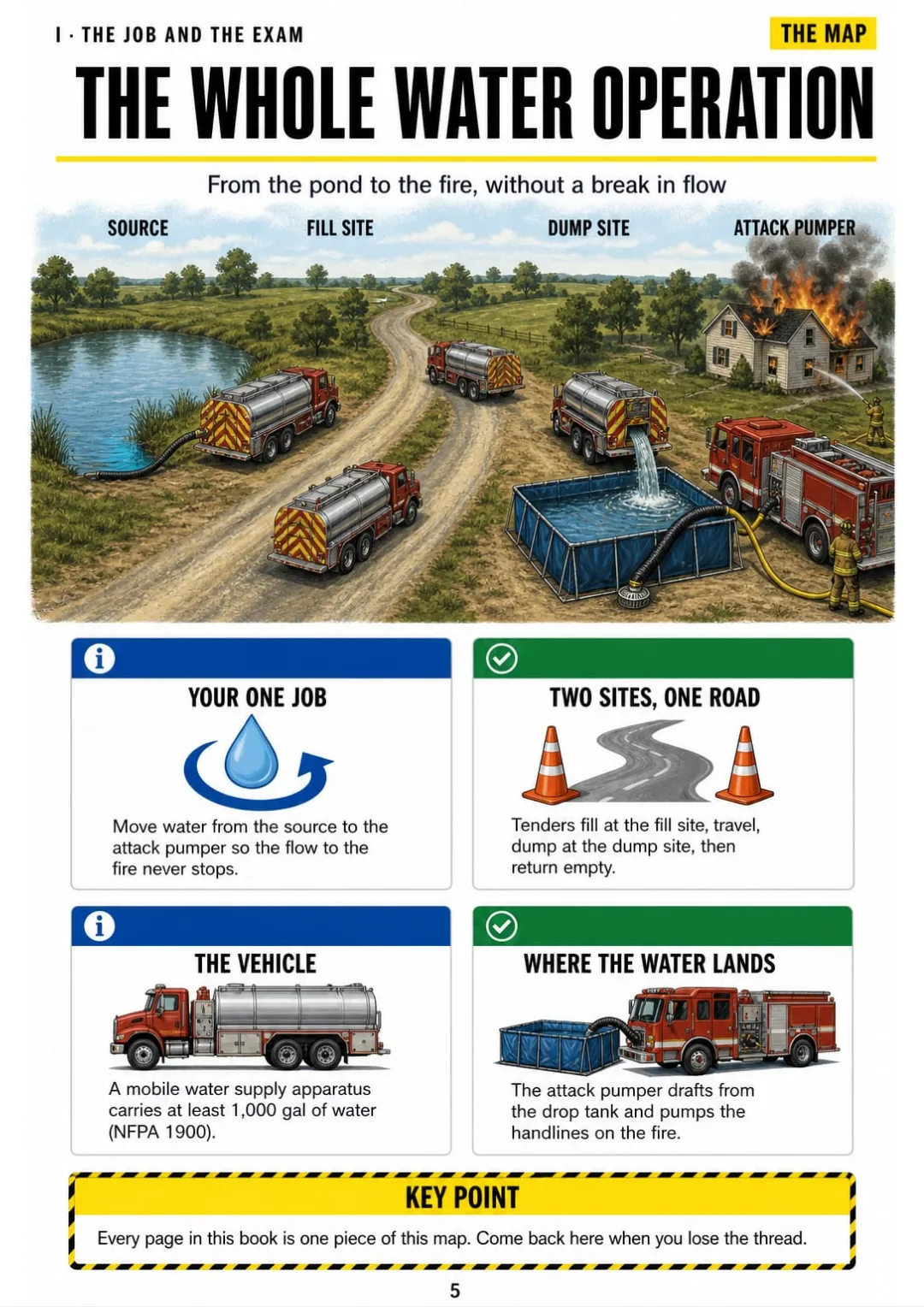
Source → fill site → travel route → dump site → attack pumper, all on one map
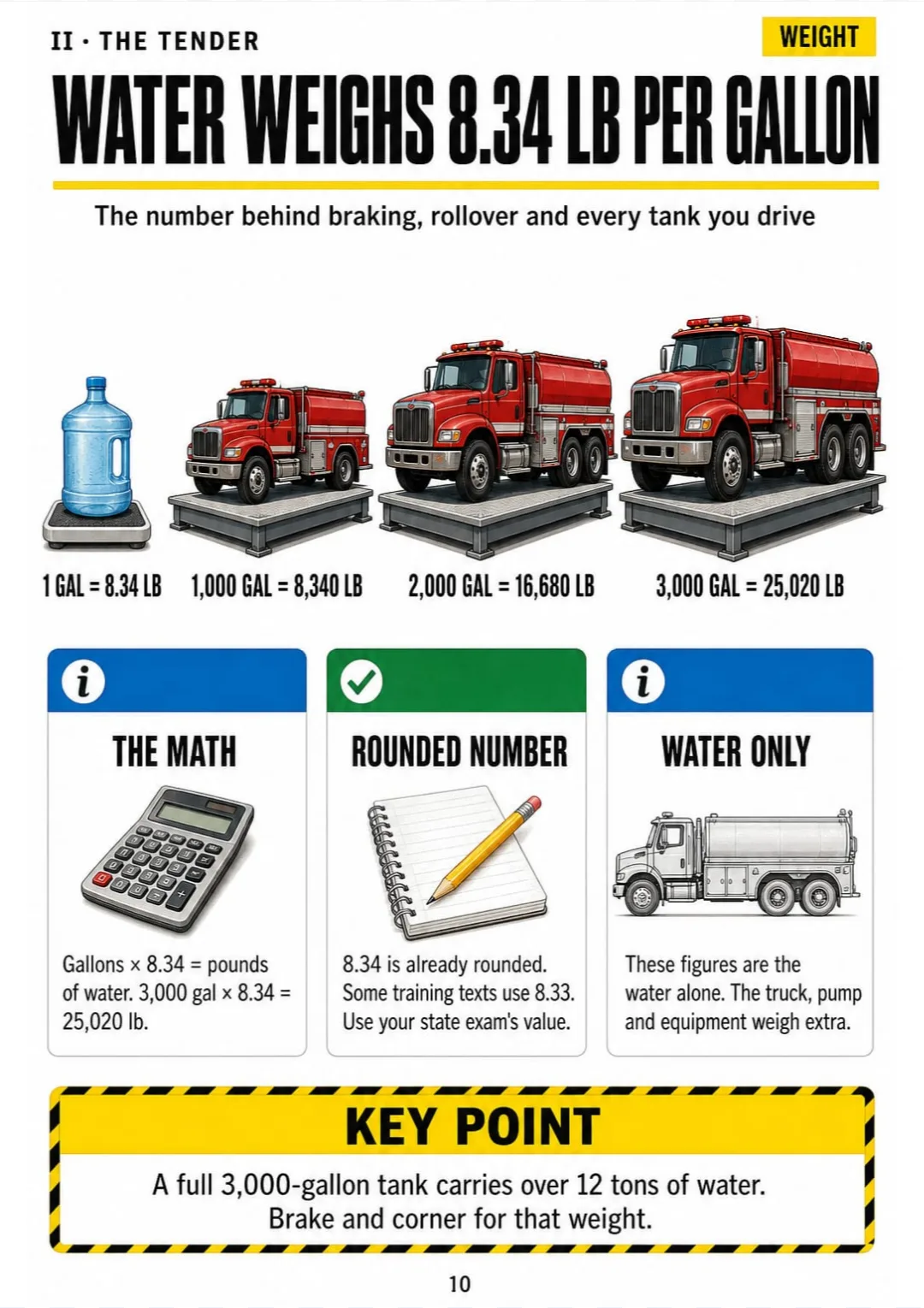
1 gallon = 8.34 lb · a 3,000-gallon tank holds 25,020 lb of water
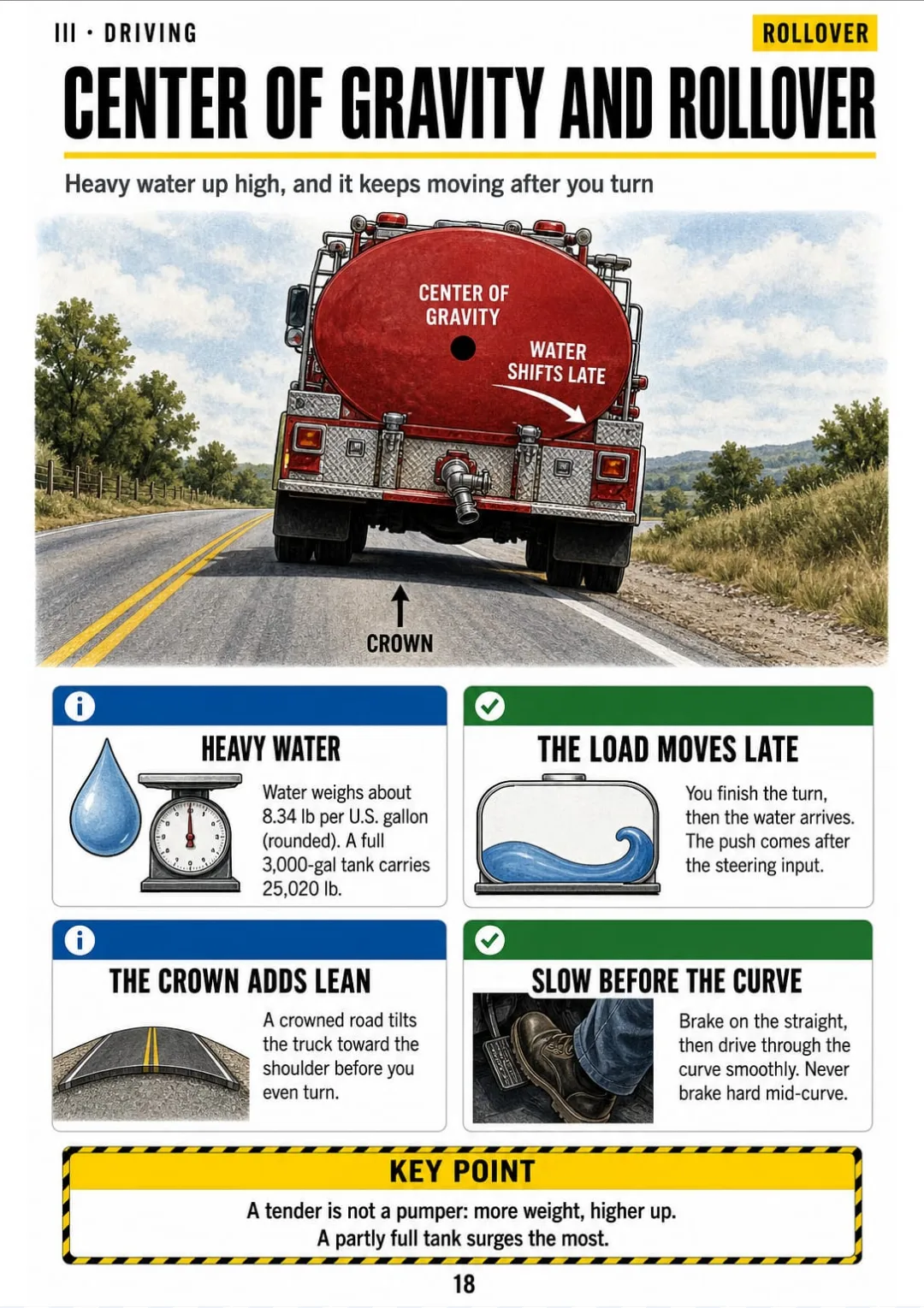
High center of gravity, late water surge, crowned roads: why tenders roll over.
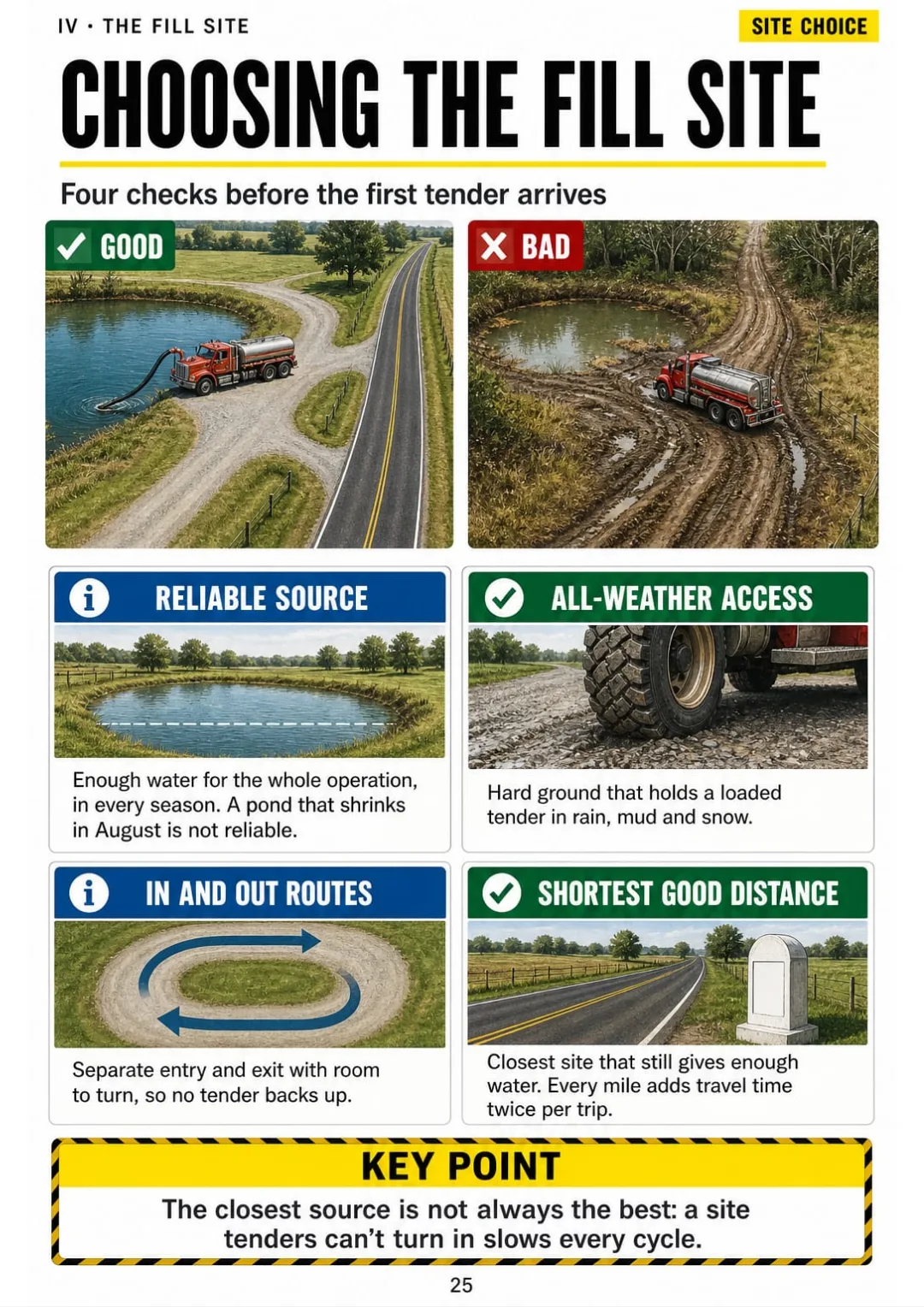
Four fill site checks: reliable source, all-weather access, in/out loop, distance
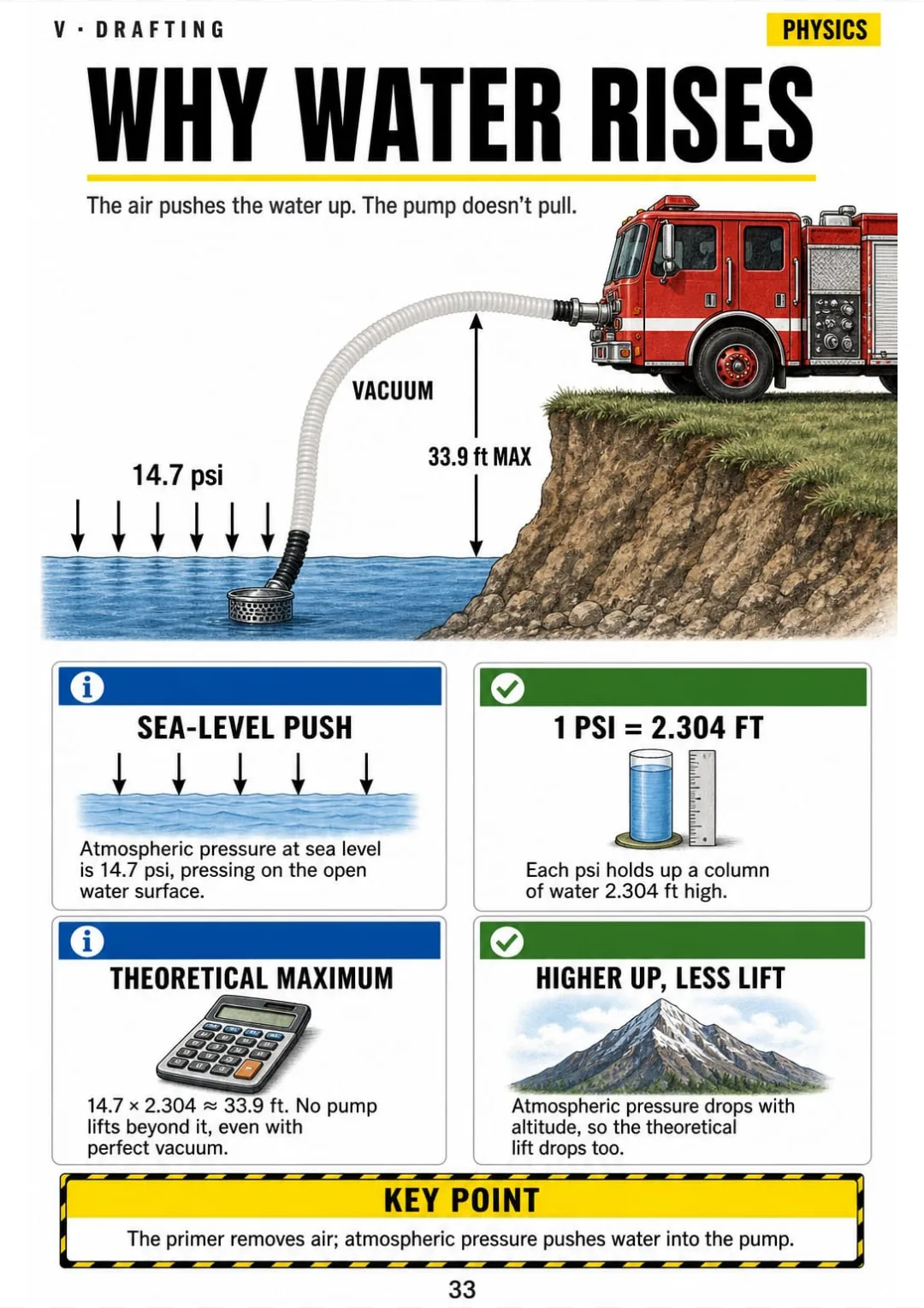
14.7 psi × 2.304 ft per psi = about 33.9 ft of theoretical lift
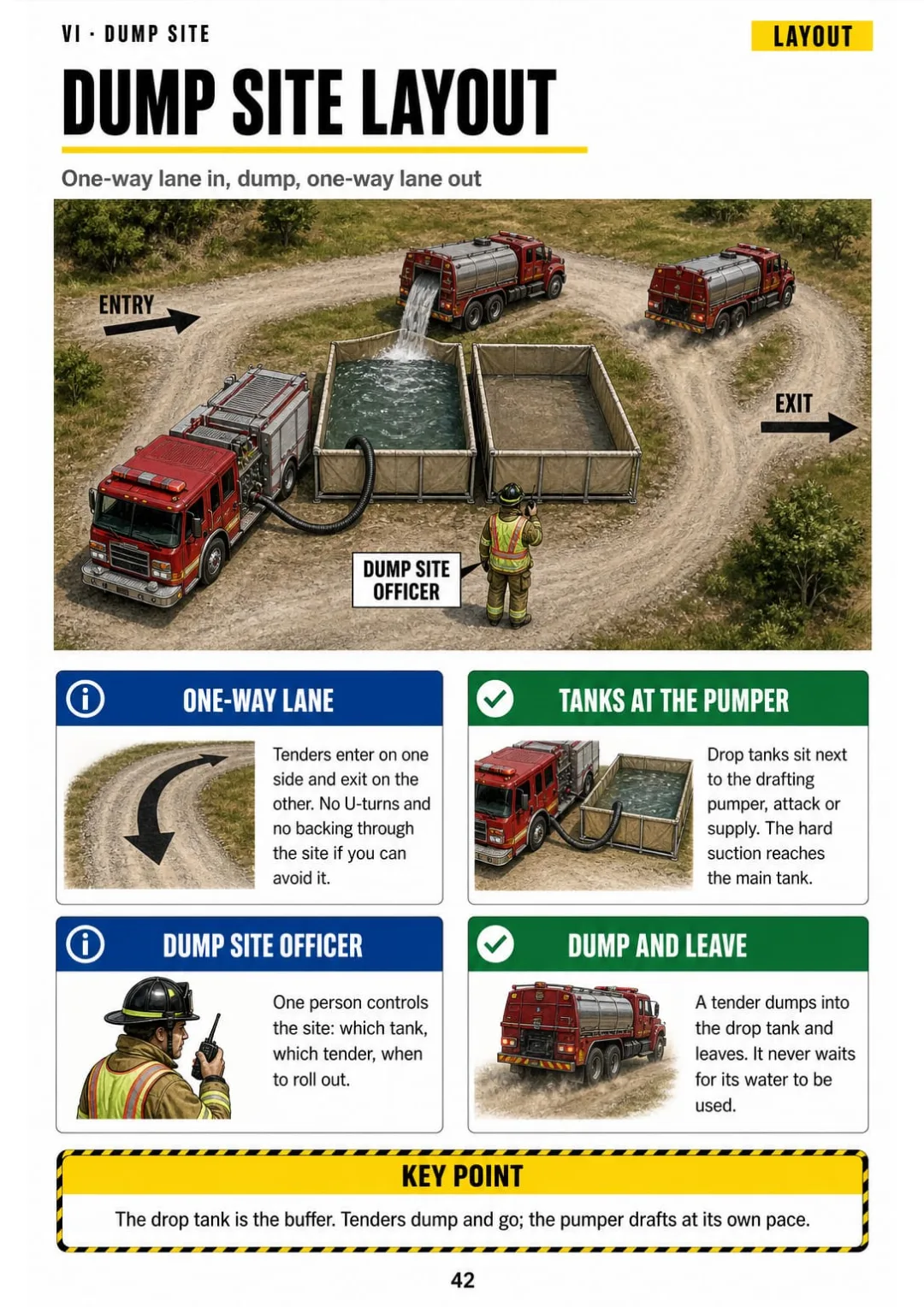
Dump site from above: drop tanks at the pumper, one-way lane, entry, exit and a dump site officer.
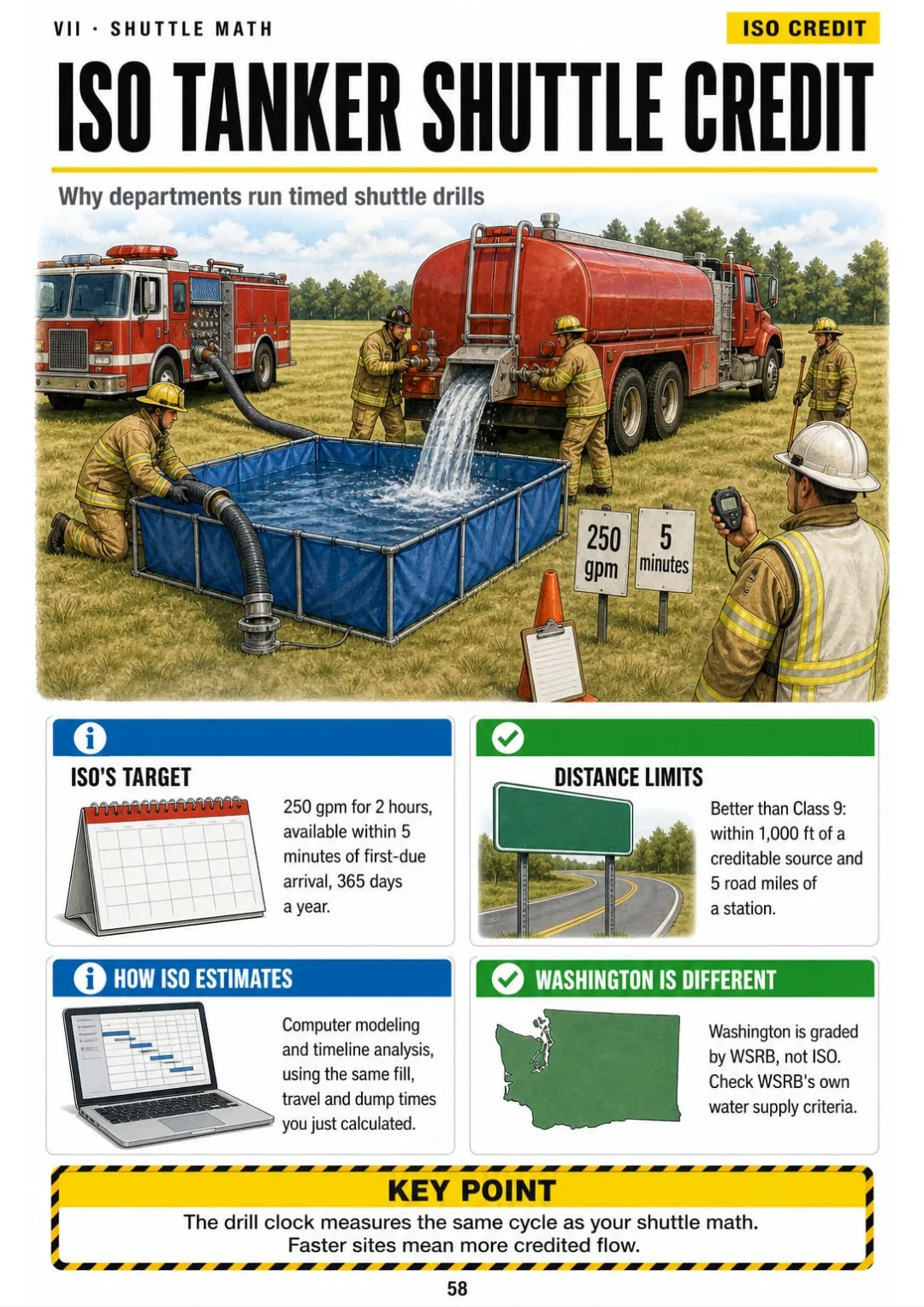
ISO: 250 gpm for 2 hours within 5 min of first-due arrival, 365 days a year
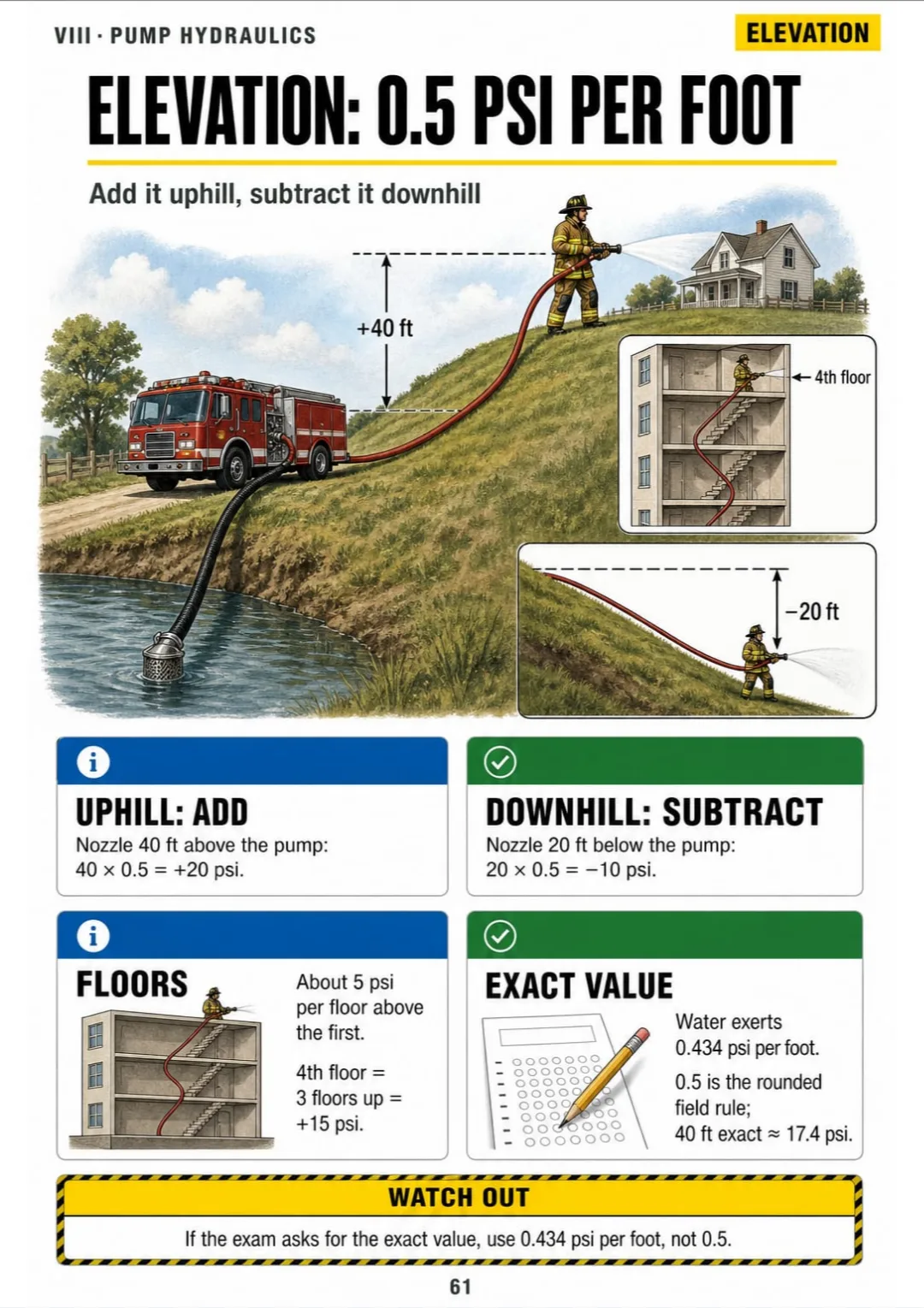
0.5 psi per foot (exact 0.434) · about 5 psi per floor above the first

Swipe to see more →

These are real pages from the book. The table of contents is the full one: 9 parts and 64 topics.

The Problem Isn't You. It's How It Was Explained to You.

You're behind the wheel of a full tender on a crowned county road. The curve tightens, and you feel the water shift a beat after the truck does.

On the written exam, that same moment turns into a question about center of gravity and surge. The manual covers it in a few dense paragraphs, and by the next morning the terms are just words.

High center of gravity, late water surge, crowned roads: why tenders roll over.

In the book, rollover is one page: the tender drawn from behind, the center of gravity marked high, the water surging late and the road crown tilting it all.

The same goes for baffles and partitions, stopping distance with a full tank, the soft shoulder, the air brake check and backing with a spotter. Each one has its own page.

You see why tenders roll over, and you can drive it and answer it without reopening the manual.

COMPARE FOR YOURSELF

Same Topic, Two Ways to Study It

THIS
  • The manual: line after line after line
  • Water weight and load explained only in words
  • You walk into the exam still unsure
The flow rate of a tanker shuttle is determined by the quantity of water each apparatus can effectively deliver relative to its total cycle time, which is composed of the time required to fill the tank at the fill site, the travel time to the dump site, the time required to discharge the tank into the portable reservoir and the return travel time, with the understanding that not all of the tank's rated capacity is effectively delivered and that the slowest component of the cycle ultimately limits the sustained flow available to the attack pumper.
FOR THIS
  • Water weight in one drawing
  • 8.34 lb and 25,020 lb in a box
  • You see it and you get it
1 gallon = 8.34 lb · a 3,000-gallon tank holds 25,020 lb of water
CONTENTS

Take a Look at the 9 Parts and 64 Topics

The job and the exam, the tender, driving, the fill site, drafting, the dump site, shuttle math, pump hydraulics and exam review: 68 pages, all illustrated.

IThe Job and the Exam · pp. 5-9
  1. What a Mobile Water Supply Operator Does
  2. NFPA 1002, NFPA 1010 and Your State Exam
  3. Written Exam vs. Practical Skills
  4. The Shuttle Always in the Same Order
  5. Words You Need Before Page One
IIThe Tender and Its Water · pp. 10-17
  1. Water Weighs 8.34 Pounds per Gallon
  2. Tender Types and NIMS Typing
  3. Baffles, Partitions and Surge
  4. Tank Vents and the Collapsed Tank
  5. Dump Valves and Chutes
  6. The Tender Pump and Plumbing
  7. Pre-Trip Walk-Around in the Same Order
  8. Drop Tank, Hard Suction and Tools on Board
IIIDriving the Tender · pp. 18-24
  1. Center of Gravity and Rollover
  2. The Soft Shoulder and Off-Road Recovery
  3. Stopping Distance with a Full Tank
  4. Air Brakes: The Check Before You Roll
  5. Intersections and Emergency Response Laws
  6. Backing with a Spotter
  7. The Driving Course
IVThe Fill Site · pp. 25-32
  1. Choosing the Fill Site
  2. Fill Site Layout and Traffic Flow
  3. Filling from a Hydrant
  4. The Fill Pumper and the 1,000 gpm Goal
  5. Dry Hydrants
  6. Nurse Tender at the Fill Site
  7. Top Fill vs. Direct Tank Fill
  8. Fill Site Safety
VDrafting · pp. 33-41
  1. Why Water Rises: Atmospheric Pressure
  2. Theoretical vs. Practical Lift
  3. Pump Rating at Draft
  4. Positioning at the Water Source
  5. Hard Suction: Connecting Without Air Leaks
  6. Strainers and Water Depth
  7. Priming the Pump Step by Step
  8. Losing Prime: Causes in Order
  9. Cavitation and the Compound Gauge
VIThe Dump Site and Drop Tanks · pp. 42-49
  1. Dump Site Layout
  2. Setting Up a Drop Tank
  3. Folding vs. Self-Supporting Tanks
  4. Two and Three Drop Tanks
  5. The Jet Siphon
  6. Dumping Fast and Clean
  7. Pumper at the Drop Tank
  8. Dump Site Traffic and Night Operations
VIIShuttle Math · pp. 50-58
  1. Shuttle Flow Rate: The Formula
  2. Fill Time and Dump Time
  3. Travel Time: T = 0.65 + 1.7 D
  4. Worked Example: One Tender's Flow
  5. How Many Tenders You Need
  6. The Slowest Step Sets the Flow
  7. Required Fire Flow in Simple Terms
  8. Total Water Needed: NFPA 1142 / 1140
  9. ISO Tanker Shuttle Credit
VIIIPump Hydraulics for the Operator · pp. 59-62
  1. Friction Loss: FL = C × Q² × L
  2. Pump Discharge Pressure
  3. Elevation: 0.5 psi per Foot
  4. Relay Pumping vs. Tanker Shuttle
IXExam Review · pp. 63-68
  1. The Whole Shuttle on One Page
  2. Numbers to Know Cold
  3. Drafting Skills Station Checklist
  4. Drop Tank and Dump Skills Checklist
  5. Shuttle Math Drill: 5 Worked Problems
  6. Most Frequent Mistakes on Test Day

One Page, One Topic, All Clear

Think of it this way:

It's drill night, the pumper is set at the pond, and the evaluator says: prime it. Hard suction is on, the strainer is down, and now the order matters.

In the book you open the priming page and it's drawn: the pump panel, the primer control, the compound gauge going into vacuum, every step numbered.

14.7 psi × 2.304 ft per psi = about 33.9 ft of theoretical lift

The same goes for the fill site, drop tank setup, the jet siphon, shuttle flow rate and friction loss. Each one is on its own page.

Mobile Water Supply Illustrated is 68 illustrated pages in 9 parts, and it ends with skills station checklists, the numbers to know cold and 5 worked shuttle math problems.

What you see drawn, you don't have to memorize.

What's Inside Mobile Water Supply Illustrated:

Ipp. 5-9

The Job and the Exam

What a mobile water supply operator does, NFPA 1002 and 1010, written vs. practical, the shuttle order and the words you need first.

IIpp. 10-17

The Tender and Its Water

Water weight, tender types and NIMS typing, baffles and surge, tank vents, dump valves, the tender pump, the pre-trip walk-around and what's on board.

IIIpp. 18-24

Driving the Tender

Center of gravity and rollover, the soft shoulder, stopping distance with a full tank, the air brake check, intersections, backing with a spotter and the driving course.

IVpp. 25-32

The Fill Site

Choosing the fill site, layout and traffic flow, hydrant filling, the fill pumper and the 1,000 gpm goal, dry hydrants, nurse tenders and fill site safety.

Vpp. 33-41

Drafting

Atmospheric pressure, theoretical vs. practical lift, positioning, hard suction without air leaks, strainers, priming step by step, losing prime and cavitation. At the draft station, you prime in order instead of from memory.

VIpp. 42-49

The Dump Site and Drop Tanks

Dump site layout, setting up a drop tank, folding vs. self-supporting, two and three tanks, the jet siphon, fast dumping and night operations.

VIIpp. 50-58

Shuttle Math

Shuttle flow rate, fill and dump time, travel time, how many tenders you need, required fire flow, NFPA 1142/1140 total water and ISO tanker credit. Every formula worked step by step, so the math questions stop being guesses.

VIIIpp. 59-62

Pump Hydraulics for the Operator

Friction loss, pump discharge pressure, elevation at 0.5 psi per foot and relay pumping vs. tanker shuttle.

IXpp. 63-68

Exam Review

The whole shuttle on one page, the numbers to know cold, the skills station checklists, 5 worked math problems and the most frequent test-day mistakes.

At the end of the book: Skills station checklists, the numbers to know cold and 5 worked shuttle math problems.
Plus: 2 Free Books

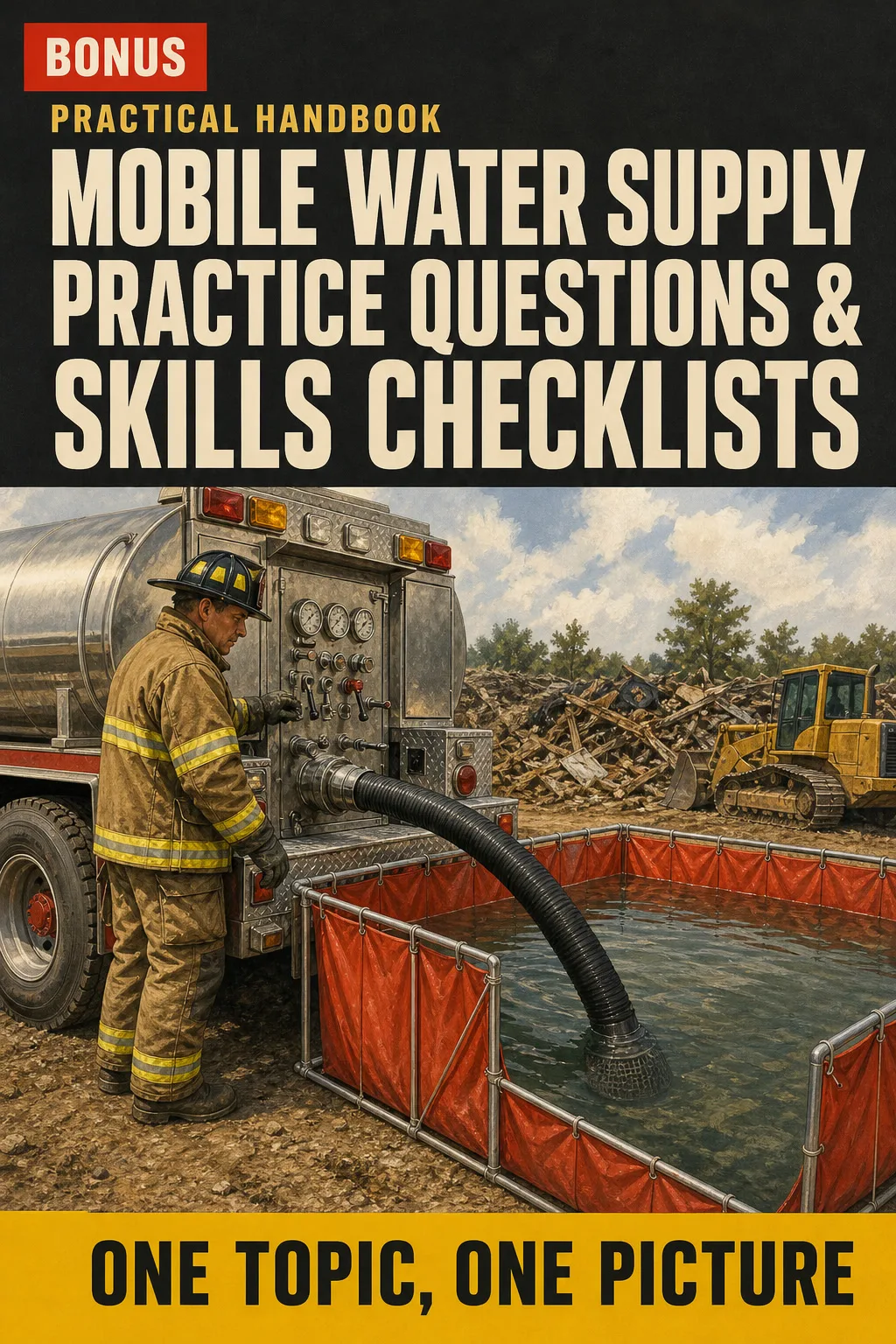
Mobile Water Supply Practice Questions & Skills Checklists

BONUS 1: «Mobile Water Supply Practice Questions & Skills Checklists»

Value on its own: US$ 17.90

Exam-style written questions with answers, plus practical skills checklists for drafting, drop tank setup and dump site work, so you know where you stand before test day.

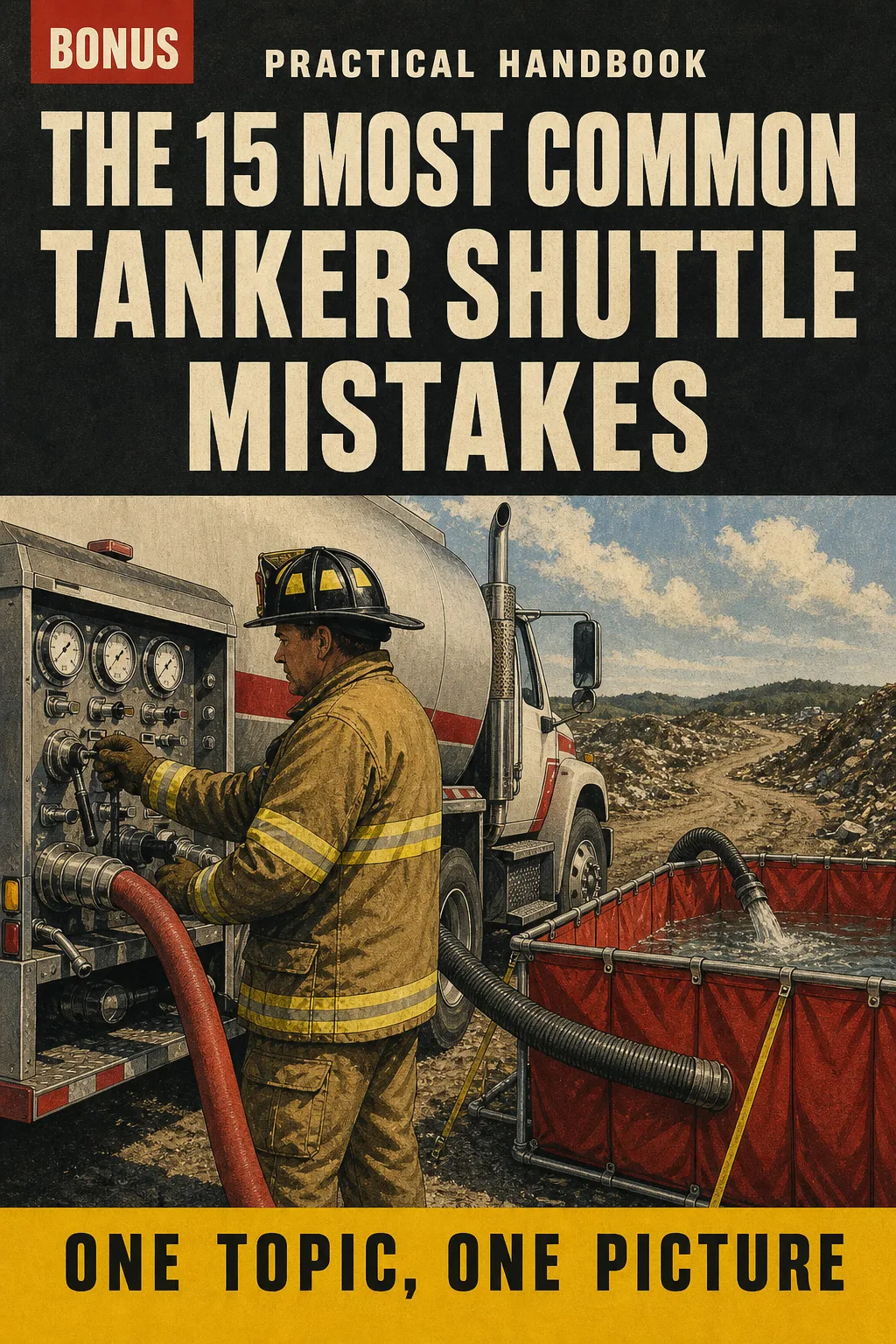
The 15 Most Common Tanker Shuttle Mistakes

BONUS 2: «The 15 Most Common Tanker Shuttle Mistakes»

Value on its own: US$ 14.90

Each mistake drawn before and after, from a kinked hard suction to a tender parked in the wrong lane at the dump site, so you catch it before the evaluator does.

Mobile Water Supply Illustrated with 2 Free Books

  • Mobile Water Supply Illustrated: 68 illustrated pagesUS$ 63
  • BONUS 1: Mobile Water Supply Practice Questions & Skills ChecklistsUS$ 17.90
  • BONUS 2: The 15 Most Common Tanker Shuttle MistakesUS$ 14.90
  • High-resolution PDF to printIncluded
Total value US$ 95.80
YOUR PRICE:
US$ 27
You save US$ 68.80
YES, I WANT MOBILE WATER SUPPLY ILLUSTRATED FOR US$ 27

📄 This is a digital PDF book sent to your email: nothing is printed or shipped.

Secure purchaseEncrypted payment30-day guarantee

PDF by email: We email you Mobile Water Supply Illustrated as a PDF, together with the two free books. It's a single payment: no installments, no extra charges.

Who This Book Is For

You're studying the mobile water supply chapter

You're studying the mobile water supply chapter

One topic per page, so a short session after work still covers something whole: the fill site, drafting or the dump site.

Your state exam is coming up

Your state exam is coming up

The shuttle in the same order every time, the math worked out step by step and the skills checklists to review before the written test and the practical.

You already drive the tender

You already drive the tender

You know the job on the road. The book puts the standard's numbers and words on what you already do, so the exam asks nothing you can't picture.

Everything You Get Today

US$ 95.80US$ 27
YES, I WANT MOBILE WATER SUPPLY ILLUSTRATED FOR US$ 27

📄 This is a digital PDF book sent to your email: nothing is printed or shipped.

30DAYS
GUARANTEE

30-Day Guarantee

Try Mobile Water Supply Illustrated for 30 days, bonus books included.

We refund everything if the file won't open, if the book isn't what you see here, if you were charged twice or if the email doesn't arrive. Just email us.

You pay once. No subscriptions.

Frequently Asked Questions

Is it for me if I've been driving the tender for years?

Yes. It isn't a beginner's book: it puts what you already do in the order and with the numbers the Driver/Operator – Mobile Water Supply exam uses, from drafting to shuttle flow rate.

Where does the content come from?

From NFPA 1002 (mobile water supply chapter, folded into NFPA 1010 in the 2024 edition), NFPA 1901/1900 and NFPA 1142/1140. It isn't written for one state: it follows the NFPA job performance requirements that Pro Board and IFSAC accredited state programs test against. Every standard number and limit is marked, so you can check it against the edition and the skills sheets your state uses.

Is this official material?

No. It's an independent illustrated study book. It isn't published or endorsed by NFPA, Pro Board, IFSAC or any state agency, and it doesn't give a certificate or count as training hours.

Does it replace my department training or state course?

No. It's for review. Apparatus driving and pump operations are learned in your department's training and your state program, with supervised practice.

Are the practice questions the ones on the exam?

No. They're exam-style questions written for this book, not official questions from any exam.

When and how do I get it?

The book and the 2 bonus books arrive as a PDF by email.

Do I have to pay every month?

No. It's a one-time payment.

Can I have it on paper?

Yes. The PDF is ready to print, so you can bring it to the station or keep it in the cab.

How does the refund work?

You have 30 days. We refund everything if the file won't open, if the book isn't what you see on this page, if you were charged twice or if the email doesn't arrive: just email us.

Before You Close This Page

No more rereading the chapter with nothing sticking.

Rollover, drafting and the dump site: you see them drawn and you've got it.

You walk into the exam knowing where everything is.

Drawings make studying faster.

The book is right below.

One-time payment: US$ 27 · Guarantee: 30 days · PDF by email

YES, I WANT MOBILE WATER SUPPLY ILLUSTRATED FOR US$ 27

📄 This is a digital PDF book sent to your email: nothing is printed or shipped.